Tampilkan postingan dengan label CARB. Tampilkan semua postingan

Rabu, 01 Juni 2016

class action lawsuit against bmw

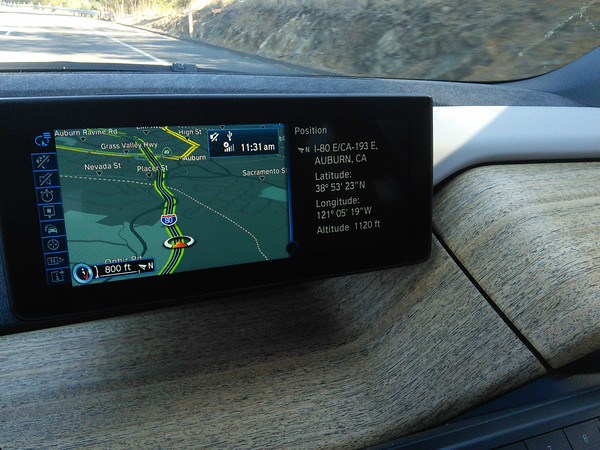
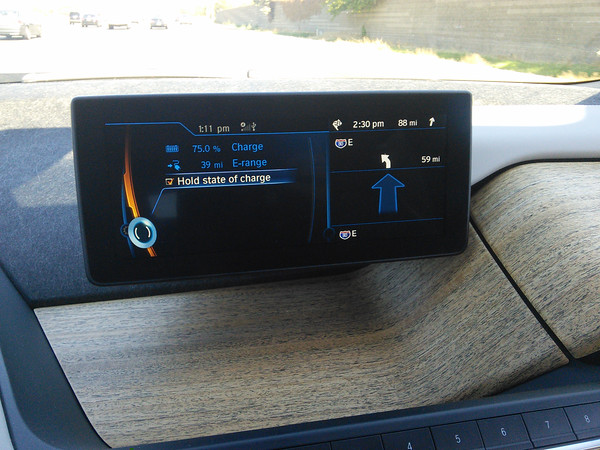
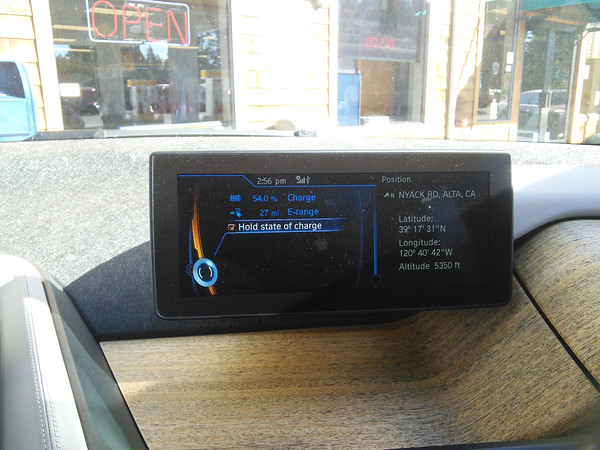
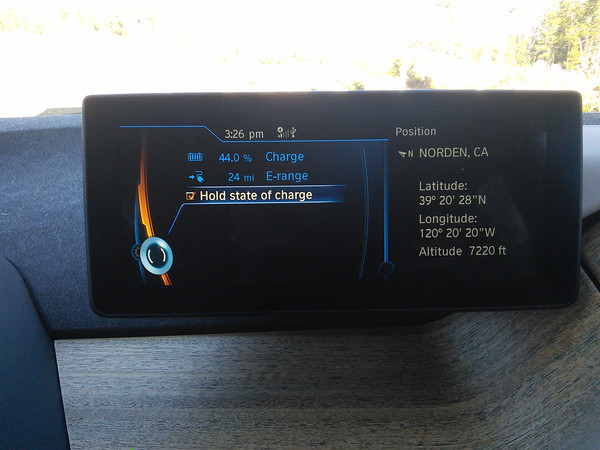
The "Hold state of charge" feature shown here on this i3 display is at the center of the recently filed lawsuit alleging the BMW i3 REx is unsafe to drive.
Recently news has spread of a class action lawsuit filed in the state of California by MLG Automotive Law alleging that the BMW i3 REx is dangerous and "can result in a catastrophic situation for all those on the road." This, in my opinion, is grossly misleading. However in fairness, to say the vehicle can be driven like any other car while the range extender is in use is also grossly misleading. To understand the juxtaposition of those two statements takes some explanation.

The truth is, the plaintiffs aren't making this up. What they are describing in the lawsuit is called "Reduced Power Mode" and it can happen under certain strenuous circumstances when the vehicle continues, for a prolonged period, to consume more power than the range extender can provide. In this post I'm going to attempt to explain why and when this can happen, how this became an issue, and what could have been done to prevent it from getting to the point of a lawsuit. 

Far and away the most misunderstood aspect of the BMW i3 is its range extender. Ever since early February 2011, when BMW's Financial Officer Frederick Eichinerto announced that the i3 (then known as the Megacity Vehicle) would have an optional gasoline motor to extend the vehicle's range, there have been questions. I remember early adopter electric vehicle enthusiasts speculating over the potential efficiency and power output of the motor on numerous online forums and EV news sites. I was in fact, one of them. 
The 650cc two cylinder range extender sits next to the electric motor over the rear axle.
Fast forward to 2016, two and a half years after the i3 launched and most people still don't really understand the i3's range extender. That's because it's different than anything on any other car sold. No other OEM before or after has offered an optional range extender on an electric vehicle, allowing the customer to decide which form (BEV or extended range PHEV) better suits their personal driving needs. BMW designed the vehicle with as small, as efficient, and as light weight a range extender as they could, while still delivering the power necessary to perform its task. The problem is, it's unclear to many owners what exactly its task is, and therein lies the rub.

If you ask BMW, they'll tell you the range extender is an APU (auxiliary power unit), and its primary function is to extend the range of the vehicle, in order to get the driver home safely or to the next charge point, without worrying about being stranded with a depleted battery. The range extender is not a fully capable large engine, as found in series-hybrid type vehicles such as the Chevy Volt. Vehicles like the Volt can run indefinitely without the need to ever actually plug it in to charge it, while the i3 REx, cannot. However it's unclear if the majority of i3 REx customers actually realize that. It seems many believe the i3's range extender is supposed to operate like the Volt's range extender, to power the vehicle as long as necessary and under any circumstance needed, and that's simply not the way BMW engineered this vehicle. BMW i3 product manager Jose Guerrero once said he viewed the range extender as being “almost like training wheels for the BEV.” I've spoken to Guerrero extensively about this, and he's consistently referred to the range extender as a backup system which is meant to keep the driver from having range anxiety, and worrying whether or not they'll make it home.

The i3 was the first, and still is the only vehicle that is classified by the California Air Resource Board (CARB) as a "BEVx" vehicle.  According to CARB, a BEVx vehicle is,"a relatively high-electric range battery-electric vehicle (BEV) to which an APU is added." Additionally, the vehicle must meet the following criteria:
  • The vehicle must have a rated all-electric range of at least 75 miles
  • The auxiliary power unit must provide range less than, or at most equal to, that of the battery range
  • The APU must not be capable of switching on until the battery charge has been depleted
  • The vehicle must meet "super ultra low emission vehicle" (SULEV) requirements
  • The APU and all associated fuel systems must comply with zero evaporative emissions requirements
I highlighted the third line because this is really the crux of the issue which has caused this class action lawsuit. BMW designed the software on the i3 to allow the customer to manually turn on the range extender once the state of charge was below 75%, recognizing the occasional need to hold back extra energy in the battery pack for later in the journey when they would need it. By selecting this "Hold Mode", the range extender will turn on and hold the state of charge at that level, or close to it, depending on the current power draw. The Chevrolet Volt has a similar feature to accomplish the same result which is to reserve electric power for later in the journey when the driver expects they may need it.  Because of this, a Volt can climb any mountain road in North America without issue, as long as the driver properly uses this feature.

However, if BMW allowed the i3 REx customers in California to have access to a REx hold mode, the vehicle wouldn't qualify as a BEVx vehicle. It would then be classified as a plug in hybrid (PHEV) in the Transitional Zero Emission Vehicle (TZEV) class. In that case, BMW would lose thousands of dollars in zero emission vehicle credits for every vehicle sold, because BEVx vehicles are treated as pure battery electric cars, and thus get the maximum ZEV credits. Of course BMW could have placed the restrictions only on the cars they sold in California and other CARB states to qualify as a BEVx, and sold the car everywhere else with a hold mode as they do in Europe, but it was explained to me that they didn't believe selling the car which operated differently in different states in the same country was prudent. So in order to comply with the BEVx rules, BMW modified the software on all cars sold in the US. This modification eliminated the hold mode option. The range extender therefore only turns on when the state of charge is 6.5%, and the driver has no control over it. They also had to limit the amount of gasoline available from 2.4 gallons to 1.9 gallons to make sure that the all electric range was less than the range while running on gasoline, another criteria of the BEVx classification. So even though the gas tank could hold 2.4 gallons, only 1.9 gallons is available to the driver. This modification caused the delay of releasing the range extended i3 to the US customers back in 2014. I was one of the customers whose car was held up at the port so BMW could modify the software, and print the Monroney label for the window.

Even though the range extender turns on at such a low SOC, the little 34hp motor can keep up with the power demand under most conditions. I've driven my i3 REx on quite a few trips which covered hundreds of miles without any issue, even though it wasn't ideally designed for that type of use. It's been my experience that I can set the cruise control for 70 mph and the range extender can supply the needed power to allow me to drive indefinitely on relatively flat terrain, even climbing a few hundred of feet in elevation from time to time. However, I've noticed if I drive faster than 70mph after a while the state of charge will erode, and the possibility of the car entering reduced power mode is introduced. For that reason, whenever I'm driving long distance on the range extender I keep an eye on the SOC, and slow down a little when I begin a long, sustained climb. For me, the beauty of the range extender is it means I never have to worry about coming up short on range. If I pull up to a public charging station and it's broken or being used, I can still continue driving without having to drastically alter my plans.

Where I live and drive the terrain is relatively flat, and as such a hold mode isn't really as necessary. However driving in areas that have long sustained climbs, especially where the vehicle will be traveling at highway speeds, the operator could certainly benefit from a hold mode. This would allow the driver to engage the range extender at a higher state of charge, reserving the extra energy needed to complete the climb.

Despite calls from some armchair engineers, in my opinion the i3 doesn't need a larger engine. Doing so would add weight and reduce efficiency. The 650cc engine is fine for just about any use, the only exceptions being prolonged high speed (over 70mph) driving, and long, sustained hill climbs which are many miles long at highway speeds. European i3 owners don't seem to have any issues because they can switch the range extender on early if they believe they will need the extra battery reserve at a later time in their journey. So what can US i3 owners do to alleviate the problem? Many have resorted to coding their car which will restore the hold mode. It's a relatively simple procedure, but one that can possibly void the vehicle's warranty. Although whether or not doing so can void a new vehicle warranty has been disputed by some in the vehicle coding community. Coding the car not only restores the hold mode, but can also allow full use of the car's 2.4 gallon gas tank.
Even though the car actually has a 2.4 gallon gas tank, BMW restricted the amount of gas available to 1.9 gallons through software. Had they left the entire 2.4 gallons accessible, the range on gasoline would be slightly greater than the electric range, and therefore not qualify for the BEVx designation.

I've never coded my i3, because I've never had the problem of the car going into reduced power mode. I understand the limitations of the range extender, I watch my state of charge and if I see it getting dangerously low I simply slow down a little. That said, I do understand that many owners don't know how the REx works, and expect it to be able to do anything, under any condition, which it cannot. The APU isn't a large engine that one would expect to find in a car. It's actually a BMW scooter engine which was modified to act as a generator for the i3. That said, with the proper use of a hold mode, the vehicle is capable of climbing any mountain road in North America, as proven by i3 owner and engineer John Higham, when he set out to prove just that by climbing 7,228 feet to Donner Summit in Lake Tahoe last year. John proved the i3's engine is robust enough to power the car up any incline at highway speeds, as long as the operator had access to, and properly used a hold mode.

So what's the problem? Why doesn't BMW just sell the car in the US as they do in Europe, and allow the hold mode and solve the problem. They may eventually have to if the lawsuit is successful, but until they are forced to as mentioned before, it's all about the extremely valuable CARB credits. BMW (along with Chrysler and Volkswagen) lobbied hard to convince CARB to create the BEVx class in the first place. GM was right there with them, but was unsuccessful in trying to convince CARB to relax the criteria enough to allow the Volt to also qualify. The difference between being classified a BEVx vehicle as compared to a PZEV may be as high as $10,000 per vehicle, although that's only an estimate I got from someone familiar with the CARB credit valuation. I don't personally know the exact amount, but I do believe it's many thousands of dollars per vehicle. When you consider BMW has sold nearly 15,000 i3's with the range extender in the US already, you can see how the BEVx qualification may have netted BMW over $100,000,000 already.

It's clear people are buying these cars without really understanding how they work and what the limitations may be, and this lawsuit only further proves that point. I highly doubt many i3 owners in the US even know BMW purposely restricted software that the car has which allows for manual operation of the range extender, and I'm sure the people behind the lawsuit had no idea the car could enter a reduced power mode under certain conditions when they bought it. There's a clear disconnect between BMW and the customer with regards to how the range extender functions, and what its purpose is. Is it an APU designed to keep you from being stranded with a flat battery, or is it a dual-fuel system which allows you the freedom to go wherever you want and at any desired speed? There's really nothing else on the market quite like the i3's range extender, so it's really important that the customer has access to the information necessary to understand how it works. This lack of understanding has been simmering for two years and it's now come to boil in the form of this class action lawsuit.

So is it all BMW's fault? Is this simply a case of a greedy manufacturer putting their customer's lives at risk in order to line their pockets cash? I don't think describing it that way does the whole situation justice. BMW obviously has to take the majority of blame for this resulting in a lawsuit, but to say it's all their fault isn't correct. There's plenty of blame to spread around if you really want to be fair. Here's how I see it:


BMW

It's clear the majority of blame has to fall on BMW's shoulders. They built an electric vehicle that was really unlike any other. They included software to allow the operator to turn the range extender on early if they felt they needed to. However, for the US market they disabled that software in order to comply with the California Air Resources Board's strict BEVx criteria. BEVx is a category of electric vehicle that BMW lobbied CARB to create in the first place, and gives the manufacturer full ZEV credits, even though the vehicle burns gasoline in some conditions. It's the only vehicle in the US that is capable of burning gasoline, but is still treated as a pure ZEV by the California Air Resource Board.
An audible warning and this visual alert comes on when the state of charge drops below 3%, warning the driver that reduced power is possible. You can also see the SOC display in the top left corner. That was also added to help the driver avoid reduced power mode.  These warnings were added in 2015, slightly less than a year after the i3 launched in the US.
When the i3 REx was first released, the driver had no warning before the vehicle went into reduced power mode. One minute you'd be cruising along at highway speed, and suddenly it would slow down drastically because the range extender couldn't keep up with the power consumption. Less than a year after the i3 launched in the US, BMW made a software modification to help warn the driver before the car went into reduced power by adding audible and visual alerts.

BMW has provided their dealer network literature to help them understand how the REx works. They have also held BMW i certification training programs, which were deep-dive, extremely informative training sessions for the i3 & i8. The information is there, but does it reach the customer? In most cases I'm afraid it doesn't. BMW's share of the blame: 50%

CARB

CARB created the BEVx classification with the hopes of increasing the amount of miles driven on electricity. They view the BEVx vehicle as one that fits a category between plug in hybrid electric vehicles (PHEVs) like the Chevy Volt, and pure battery electric vehicles (BEVs). The goal for BEVx was to increase the amount of miles driven on electricity from 80% (that of an average PHEV) to over 90% and be a "Transitional Vehicle" between ICE and pure BEV. (John Higham went deep into CARBs BEVx classification reasoning in this 2015 post.)

However in doing so, they created criteria so onerous that no manufacturer other than BMW has made a vehicle that fits the stringent rules of the classification. In fact, in order for the i3 to qualify for this category BMW had to disable features that actually prevent i3 owners from using the car more often! The restrictions, and the fear of the vehicle possibly going into reduced power mode actually forces some i3 owners from taking the vehicle on certain days, instead electing to drive their ICE vehicle that day. This is counter productive and acts exactly the opposite of what BEVx was trying to accomplish, which was to facilitate MORE electric miles driven. If CARB needs to feel like they're getting something in return for removing the restrictions on manual control over turning on the APU, then I suggest they raise the all electric range from 75 miles per charge to 100 miles per charge.

I want CARB to make it difficult. I want CARB to continuously increase the electric range which vehicles need to provide in order to qualify for credits, and I want automakers to be forced to innovate to come up with solutions to CARBs mandates. However I also want the criteria to be attainable. The BEVx category has the potential to deliver over 90% electric miles and simultaneously allow the manufacturer to build in software to allow the driver to manually turn the APU on if they feel they need to. CARB may argue that doing so will result in drivers turning on the APU needlessly, and burning gasoline they didn't need to. That may happen on a very small percentage of case, but I contend the net result will indeed mean more all electric miles driven because more BEVx vehicles will be sold, and their owners will use the vehicle for journeys they currently don't for fear of reduced power occurring. People who buy electric cars don't want to burn gasoline unless they really believe they need to, and they aren't going to just turn on the APU for the fun of it. Owner's have paid more money up front to own and drive an EV, to think they would then fire up the gasoline range extender when it isn't needed is nonsensical. CARB's share of the blame: 25%


BMW Dealerships

Whatever transpired behind the scenes with BMW & CARB, once the cars landed into the showrooms it became the dealers' job to make sure the customers understood how the vehicle worked before they drove home with it. 

I know for a fact that early on, when the car first launched BMW dealerships did not have the information or training necessary to explain how the i3 worked. Many client advisers sought help from online forums and i3 enthusiast groups. Through my i3 blog I had dozens of client advisors reach out to me with questions, many of which centered around the range extender. However a few months after the launch BMW caught up and started offering i3 & i8 training programs, along with instructional literature that helped the client advisers immensely. Still, comprehensive electric vehicle information is rarely available at dealers. This isn't a BMW specific problem, though. Most manufacturers selling EVs have struggled to provide information about the cars needed at the dealer level.

However, BMW had a particularly difficult task with the i3 REx since the range extender is complex. Because of the software limitations there are tasks that the vehicle cannot do, but how do you explain that? Can it climb a 5% grade at 65 mph for 5 miles? How about 3% grade at 75 mph for 10 miles? That's just impossible to explain to customers even if the dealer actually knew. I think the best solution given the current circumstances would be to develop a simple "range extender 101" guide that dealers could give to potential customers. I know this may scare some customers away, but isn't the goal to put the client in the vehicle that suits them best? I feel a little bad blaming dealers for this because they have so many vehicles to sell that they can't possibly know everything about every vehicle. However if they did a better job explaining that the range extender does have limits, there might not be a lawsuit pending today. Dealership responsibility: 15%

The Customers

Two words: Caveat emptor. So much has been written about the i3's range extender and it's inability to perform certain tasks that I find it impossible not to place some blame on the customers filing the lawsuit. A simple Google search of "BMW i3 range extender" yields nearly half a million responses, many of which detail the limitations of the range extender. Refine the search to "BMW i3 range extender problems" and there are over 90,000 results that all, in one way or another, speak of the limitations or potential problems it has. I find it very hard to believe that people today buy a $50,000 car without doing even limited internet research, especially when that vehicle is unlike any vehicle they have ever purchased before. If the people in this class action suit had spent even 15 minutes doing some research before they bought the vehicle than perhaps they would have realized the range extender had limitations. I can't help but look at this as another example of "it's not my fault" syndrome, and a clear reminder of how litigious a society the US has become. Customer responsibility: 10%

Summary

It will be very interesting to see how this lawsuit plays out. I fully expect BMW to rigorously defend themselves, and I'm sure CARB is also watching this closely. I know it wouldn't hold up legally because nobody forced BMW to comply to CARB's requirements, but I'd love it if somehow CARB could have been named in the suit because I absolutely find them complicit to the root cause of this issue. Whatever the outcome I do expect this issue with the i3's range extender to go away soon. The 2017 i3 will be available in a few months and has a 50% larger battery. I suspect BMW will build a much larger battery buffer into the low end of the i3 REx usable battery capacity. Therefore even without a hold mode the car may very well have so much energy stored in the battery buffer that it will be able to sustain prolonged climbs at highway speeds. It may not be able to climb Pikes Peak at 70mph, but it should be able to just about anything short of that. Of course if BMW loses this suit, and is somehow forced to restore the hold mode on all i3's, then the larger battery buffer in the 2017 i3 wouldn't be necessary.

I have over 50,000 miles on my i3 REx and as mentioned I've never had an issue with the vehicle going into reduced power mode. However as noted, that doesn't mean it isn't a real problem because it does happen to others. The heart of the issue is the question of what's really the purpose of range extender? Is it what BMW designed it to be, what CARB wants it to be, what the dealers sold it as, or what the customers thought it would be? In my opinion everybody involved had a narrow vision of what it was, and saw only what they wanted to see. BMW should have done more to prepare the dealers to sell this unique vehicle. The dealers should make sure their clients know what they're buying before the leave the lot. CARB should have realized the BEVx restrictions are actually hurting EV adoption, and if the plaintiffs in the suit had done even minimal research before they bought the car they would have realized the car has limitations.

Should issue this have ended up in court? Whatever side you're on I think we can all agree it's very unfortunate that it's come to this. The BMW i3 REx is a wonderfully unique vehicle, too bad it's so misunderstood.

Selasa, 15 Maret 2016

Battery Options for the 2017 BMW i3?

A Samsung employee shows of one of the new 94Ah battery cells which I predict the 2017 i3 will boast
Ever since last October when BMW CEO Harold Krueger stated that the 2017 i3 would have an increased electric range, there's been speculation on how they would accomplish it. While BMW hasn't made any official announcements yet, it's widely believed that BMW will be using the new Samsung 94Ah battery cells for the 2017 i3, which I first speculated here, back in November. 

The current i3 uses 96 Samsung 60Ah battery cells which are 3.75v ea. This adds up to a total of 21.6kWh (96 x 60 x 3.75= 21.6). The new 94Ah cells are the same physical size and voltage so an upgrade to these cells would mean BMW could use the same modules and battery tray, greatly reducing the cost as compared to engineering all new packaging for the new cells. Therefore, the new pack should increase from 21.6kWh to 33.8kWh (96 x 94 x 3.75 = 33.8). If the weight of the cells is the same, that should increase the BEV i3's range from the existing 81 miles per charge to approximately 125 miles per charge and the i3 REx's range from 72 miles per charge to about 112 MPC.
The battery pack of my i3 REx. It was removed to replace a faulty battery heating element. 
So we know for sure that the 2017 i3 which begins production this summer will have increased range from improved battery cells, and we believe we've figured out which cells BMW will be using. The next logical question then is:  Will that be the only battery available for the 2017 i3, or will BMW also continue to offer the current 60Ah cells as a lower cost battery pack option? We say the latter.

As a comparison Tesla has always offered different battery pack options for the Model S. That, along with direct sales and the Supercharger network been part of the fabric which has made the Model S so appealing to so many people. But there is another example of an OEM offering battery size options which is an even better comparison, and that's Nissan. Ever since the Nissan LEAF launched in late 2010, it had been fitted with a 24 kWh battery pack. Just past Fall Nissan added a 30kWh battery pack as an option. The entry level "S" model still has the 24kWh battery pack, but if you want the higher level SV or SL trims, you also get the new 30kWh battery pack. 

BMW could do something like what Nissan did and continue to offer the 21.6kWh battery pack, but only on a base i3, to offer a lower cost option. Or they could do like Tesla does and simply allow the customer to choose the battery size they want like any other option. This will however drive dealers nuts because they'll now have to stock four different i3's. Some dealers are already having difficulty deciding how many of each of the current two versions to stock, so four different versions of the i3 definitely won't make their life any easier.  I am however, going to predict this is indeed what BMW does, and if I am correct, here's the 2017 i3 options that will be available as early as this September:

BEV with 21.6kWh battery and 81mi electric range
REx with 21.6kWh battery, 72 mi electric range & 74 mi additional gas range (39mpg x 1.9gal)

BEV with 33.8kWh battery and ~125 mi electric range
REx with 33.8kWh battery, ~112 mi electric range & 93 mi additional gas range (39mpg x 2.4gal)

Note the gasoline range on the 33.8kWh i3 REx increased from 74 miles to 93 miles. That's because in the US, BMW reduced the amount of gasoline available on the car to 1.9 gallons, even though the  fuel tank is actually 2.4 gallons. European customers have had access to the full 2.4 gallons all along, and will continue to do so. The reduced gas availability in the US was so the car would be classified as a CARB (California Air Resource Board) BEVx vehicle, giving BMW the maximum amount of the valuable ZEV credits, and qualifying the i3 for additional state rebates and tax exemptions. However, with the larger battery and longer all electric range, the i3 REx can now utilize the entire 2.4 gallons and still have BEVx designation, so I see no reason why BMW wouldn't remove the gas tank restriction and give access to the full 2.4 gallons. That would increase the overall combined range of the i3 REx from its current 142 mi to 205 mi. 
With the battery tray cover removed, you can see the eight distinct modules that make up the i3's battery pack.
Each module contains twelve 60Ah Samsung battery cells. 
Of course we're still just speculating here, and as we draw closer to the beginning of production for the 2017 model year i3 BMW has been as tight lipped as always on new or improved models. Perhaps the announcement will happen next week at NYIAS, or BMW may wait until closer to the 2017 launch as to not really kill sales of the remaining 2016 i3 inventory. In any event, the improved range will be a welcomed improvement for the i3, if not a necessary one. The new 30kWh battery pack of the Nissan LEAF is only a temporary improvement, as it's been strongly rumored that the 2018 LEAF may have a 60kWh battery. That, coincidently matches the 2017 Chevy Bolt's 60kWH battery pack, and that EV will boast a 200 mile all electric range. Then, in 2018 the Tesla Model 3 will launch, and offer a 200 mile range for about $35,000. So I'm guessing the next i3 range boost will have to happen in 2018 as a 2019 model, perhaps when the 2nd generation i3 is released. 

I'm sure BMW realizes they need to continuously improve the battery in their EV's if they want to be competitive in this space, and this LCI refresh for the i3 proves that BMW isn't going to sit idle and let the competition eat their electrons for lunch. 

Jumat, 27 November 2015

The 2017 BMW i3: 94 Ah Cells and a 125 Mile EPA Range Rating?

Might these new 94 Ah cells from Samsung SDI make their way into the 2017 BMW i3?
About a month ago BMW CEO Harold Krueger surprised the EV world by casually mentioning in an interview with Die Zeit that in 2016 the i3 would have increased range. That of course sparked a lot of online speculation as to how would BMW accomplish this. Did they figure out a way to squeeze in more of the same 60 Ah Samsung battery cells that the i3 currently uses? Might they have sourced higher energy density battery cells from another supplier? Could Samsung have made the new 94 Ah cells available to BMW now? According to Samsung's Battery Technology Roadmap it didn't look like they would have those cells available for at least another year.
From the Samsung SDI website. The 94 Ah cells aren't even listed as available (click to enlarge)
According to some well connected insiders, it is beginning to look like BMW will indeed use Samsung's now 94 Ah battery cells in the 2017 i3 which will begin production in July of 2016. Furthermore, one insider even believes BMW will offer a battery upgrade option for current i3 owners that want the new, higher energy dense battery cells. Personally I just don't see how BMW can accomplish this without charging more money for the upgrade than most i3 owners would be willing to pay. Don't get me wrong, I'd love to get the battery upgrade myself. However, even if BMW discounted the new battery pack by giving owners a credit on the battery pack they returned, what would the upgrade price have to be for current i3 owners to bite?

Samsung SDI Battery Technology Roadmap
Personally, I think I would go for it if BMW could do the upgrade for under $5,000. That would also be contingent on the rumors being correct, and the new battery pack would be the same physical size - 96 battery cells packaged in 8 modules, containing 12 cells each. Using the new 94 Ah cells, BMW would increase the i3's total battery pack size from 21.6 kWh to 33.4 kWh without increasing weight significantly, if at all. Assuming BMW continued allowing approximately 90% of the total pack as usable energy, that would mean that the new i3 will have approximately 30kWh accessible to use. 30kWh usable would increase the i3 BEV's range to approximately 125 miles per charge and the i3 REx to about 115 mpc. With 115 EPA rated miles of range, my i3 REx would almost never fire up the range extender, which is fine by me. I'd still need it for the 240-mile trips to Vermont I take every couple months, but not for much more than that. If the i3 had 125 miles of range when it initially launched, I definitely wouldn't have ordered mine with the REx.
The battery tray removed from my i3 for service. This contains 8 modules, each holding twelve 60 Ah Samsung SDI battery cells. The new 94 Ah cells are the same size and can simply replace the current cells, in the same modules and fit nicely into the existing battery tray.
However, I'm still not convinced BMW will offer an option for current i3 owners to upgrade, and I'm even less convinced that they could offer it at a price point which would make it a reasonable purchase for someone who has only owned their car for a couple years or less. If they had 100,000 miles on the car, and the battery had already degraded to 75% or 80% or so of what it was when it was new, then the owner might be able to justify the cost of a new replacement pack. Of course, this is all speculation at this point. Nonetheless, we'll be talking a lot about these questions until BMW finally releases the details. Which, by the way, I don't expect them to do for at least 4 or 5 months. Rumors of an upgrade to an EV's battery pack can really hurt sales of the current vehicle. The only thing that will hurts sales even more is when the manufacturer admits it, gives the specifications and the expected launch date for the new model. If anyone out there is i3 bargain hunting, and can live with the i3's current range, you can expect some killer deals this spring as BMW clears out the remaining 2016 inventory to make room for the 2017s with the new battery.

One i3 battery module. As you can see there are twelve cells in each module, and there are eight modules in the pack.
A battery upgrade would seemingly solve another issue that has bothered some i3 REx owners, that being the size of the gas tank - or really how much of it they have access to. All i3's come with a 2.4 gallon gas tank. However, for the US market, BMW had to restrict the amount of gas available to use to 1.9 gallons. The reason was to satisfy the California Air Resource Board's criteria for a BEVx vehicle. One of the criteria for an extended range electric vehicle to be classified as a BEVx is that the range of the car while being driven on battery needs to exceed the range it can drive on gasoline. If BMW allowed the full 2.4 gallons to be available for use, the gas range would be slightly greater than the electric range, and the i3 REx wouldn't qualify as a BEVx. BMW would lose some of the highly valuable ZEV credits they get for every i3 REx sold in "CARB states".

If the i3's electric range is increased more than 20 additional miles, then the full 2.4 gallon tank could be accessed without a BEVx violation. Therefore, I fully expect the 2017 i3 REx to have use of the entire 2.4 gallon gas tank as it does with the European i3s. Actually, if the new batteries do extend the i3 REx's battery range to the possible 115 MPC, then BMW could increase the gas tank to a little over 3 gallons if they wanted to. The i3 REx would then offer over 200 miles of driving range without needing to plug in or fill up.
Might the 2017 i3 REx have a larger gas tank?
Whether or not BMW will indeed use the new 94 Ah cells from Samsung is yet to be known. According to CEO Krueger, we do know BMW will be upgrading the i3's battery pack, and the most obvious and easiest way to do so would be with higher density battery cells. Samsung's new 94 Ah cells are the same physical size as the 60 Ah cells used in the current i3, so upgrading to the new cells couldn't be any easier - as along as they are indeed ready and available. As for the battery upgrade for existing i3 owners, it's a tempting proposition, and one that I hope BMW fully explores to see if there is a way that they can do it at a reasonable cost (I say that's under $5,000). However I'm just not convinced that they can offer an upgrade without losing a lot of money on every pack they sell. Time will tell, and I'm sure there will be a lot of discussions about his before we actually get all the facts from BMW.

Jumat, 25 September 2015

VW: Das-eption and the path to Redemption

Volkswagen CEO Martin Winterkorn resigned on Wednesday.

While this blog's primary focus is the BMW i3, I occasionally sprinkle in some featured EV products and discuss topics not necessarily i3-centric, but are instead just general electric vehicle information. In light of the recent revelations that Volkswagen has been deliberately cheating on emissions testing for many years now, I wrote the following article for Green Car Reports.

So far, no other automaker has been caught as VW has - with proof that they purposely installed a "defeat device" on the vehicles so the cars would curb their emissions only during actual emission testing. However it's fair game to speculate if other OEMs may also be exposed as cheaters now that the EPA knows what they have to look for, and how to expose it. It will certainly be interesting to watch this all unfold.

In any event, Volkswagen is going to face huge fines for intentionally violating Federal emission standards and I wanted to offer my thoughts on how I believe some of that money should be used. If we don't use at least a portion of that money to help reverse the damage done by these heavily polluting "clean diesels", I believe we will have missed a great opportunity to improve the quality of air we all breathe.


 How VW Can Atone For Diesel Deception: Electric-Car Advocate's Thoughts

The full impact of Volkswagen's diesel-emission cheating scandal has yet to be realized, but what it has apparently already admitted to doing could result in the largest civil fine ever levied by the Federal government on an automaker. And that's just the beginning.

Besides paying civil penalties, and coping with a spate of criminal actions, and class-action lawsuits, and investigations by multiple levels of government, VW also needs to deal with the 482,000 cars it sold--plus more in limbo at dealers--that clearly do not comply with emission laws.

In real-world use, these vehicles emit 10 to 35 times the allowable legal limit of certain pollutants, so they're not just slightly out of compliance. They will need to be modified to comply, or VW will have to buy them back. And if owners don't like the modified cars, they'll likely have to buy those cars back too.
After all that, VW has to figure out how to regain the trust of the public.

There are lots of aspects to this debacle, and all will undoubtedly be discussed ad nauseam over the coming weeks. But the aspect I find most interesting is how Volkswagen can best right the wrongs it has done. How does paying fines, settling lawsuits, and bringing highly-polluting vehicles into compliance really undo the damage done? It doesn't. All it does is punish Volkswagen. And I believe the public deserves more.

Make no mistake: If VW is guilty as charged, it absolutely deserves to be punished--and severely.
It turns out they aren't as clean as we were told - not nearly, actually.
But I hope the Justice Department also considers what can be done to offset the damage to air quality created by the offending so-called "clean diesels." And I hope VW, separately, does the same. We've seen penalty estimates as high as $18 billion dollars (the maximum allowed of $37,500 per vehicle for intentionally violating the Clean Air Act. I doubt the actual penalty will be anywhere close to that, but it will likely be in the billions. I think it's not unreasonable to expect the fine to be somewhere around $2.5 billion, or about $5,000 per non-compliant vehicle sold.

Why not use a portion of that civil fine to invest in a nationwide DC Fast Charge network for electric vehicles?

If just half of a $2.5 billion fine were dedicated to this purpose, we could blanket the majority of Interstate highways and major high-traffic corridors with DC fast chargers that would make switching from gasoline and diesel cars to zero-emission electric vehicles a much easier decision for many buyers. Here's why I believe that is what should be done. Helping to advance the proliferation of cleaner electric vehicles would, over time, more than reverse the emissions damage that has been done, and further improve the quality of air we breathe, instead of just punishing the offender. And shouldn't that really be the goal here?

A second thought: As well as using the fine to build out a national DC fast-charging network, how about Volkswagen getting out in front of this crisis itself and telling us how it will do its part to help clean the air it polluted?

BMW, Volkswagen and ChargePoint teamed up to create "Express Charging Corridors" on the East and West coasts. While it's a good start, much more fast charge infrastructure is needed to allow the average electric car of today to be a viable choice for long distance driving.
Rather than just declaring that it will be a leader in electric mobility, as the company has done before, show us the proof that it's serious about how it plans to expand its zero-emission vehicle offerings? VW Group could combine that with a generous investment in public charging infrastructure, on a much greater scale than last December's partnership with BMW and ChargePoint to install approximately 100 DC fast chargers.

That program in just now starting to get under way, but it's really only the beginning of what's needed. VW should commit to expanding it to 400 or 500 stations, including high-volume corridors not only on the East and West coasts but across the country--essentially following the Tesla Supercharger road map.
Tesla North American Supercharger map.
Yet another idea to consider: Give the owners of the affected vehicles the option to replace their car with a new electric Volkswagen e-Golf. Some current Volkswagen TDI diesel owners have said they now feel guilty for having driven their diesel for the past few years, with a main reason for their purchase having been both fuel economy and because it was a "clean" diesel.

Offering those owners the option to return the polluting car for a much cleaner Volkswagen could demonstrate that VW understands and is concerned with its customers' desire to drive clean cars. Many owners won't take advantage of such an offer--diesel partisans can be just as committed to their technology as electric-car advocates--but the offer would send a powerful signal about the company's intent. I believe these are the sort of things Volkswagen must consider if it wants to convince the public it is serious about making proper restitution for this egregious deception.
How about offering eGolfs to the customers that don't want their dirty diesel anymore?
There are plenty of ways to make some good come out of this shameful episode. No matter how you slice it, it will be very painful for Volkswagen AG. How well or poorly the company manages this crisis will  have a lingering effect for years to come, even decades.

It appears VW intentionally deceived both the American consumer and the U.S. government, and put public health at risk, by knowingly planning and executing a fraud. To me, and I think to many others, that's much worse than a carmaker trying to delay or prevent a vehicle recall.

But Americans are forgiving people, and sin followed by redemption is a part of our national myth. As long as we believe the offender is genuinely remorseful for what it did, and is taking steps to prove it hase learned from the offense, recovery is possible--perhaps even lauded and held up as a shining example of redemption.

Now that we've found out the real truth in German engineering, the ball has moved into VW's court to decide on what it can do to begin to offset the damage it has done to itself, its customers, and the environment.
Let's hope Volkswagen is smart enough to make the right decisions.

*Edit: BMW released a statement regarding the recent discussion of diesel engines and emission compliance. You can read it HERE.

Rabu, 17 Desember 2014

462 Mile REx Road Trip: New Jersey to Vermont

Perhaps the most discussed topic of the BMW i3 is the implementation of the range extender for the North American market. In an effort to have the vehicle qualify for the California Air Resource Board BMW set restrictions on how and when the range extender can turn on, effectively reducing the utility of the REx. These restrictions are most apparent when attempting to use the car for long journeys which include drastic increases in elevation.

This topic has been covered here and on every other EV site extensively, and recently it was announced that BMW is working on a software update that will allow, under certain conditions,  the range extender to come on much earlier than the 6.5% threshold it currently uses. I am actually beta testing that software for BMW now, having had it installed on my i3 just last week. The new software also includes some other updates that will be standard on 2015 i3s and will be uploaded to current i3 owners sometime early next year.

However this post will detail a New Jersey to Vermont road trip that I took a few weeks ago, just before I had the new software update. My in-laws live in Vermont, and I had been wanting to take this trip with the i3 ever since I got it, but I just haven't had the time. Once I knew I would be getting the new i3 software which would be adjusting how the range extender would work, I knew I needed to make the journey before I had it done, so I could perhaps compare the difference in performance the next time I go.
The Active Cruise Control is awesome. I don't think I'll buy another car that doesn't have it. 
I have taken the car on a few 200+ mile round trips, having the ability to charge up before heading home, but this would be much further, about 250 miles there and about 210 miles back home. The trip there would be longer because we were meeting at a restaurant farther into Vermont before heading back to the house. A couple of years ago I installed a Clipper Creek CS-40 at my in-laws' house, knowing that the day would eventually come when I drove an EV there, but I had never used it until now. My previous EVs (MINI-E and ActiveE) would have just been too much of a hassle to try to make this long of a trip, but the range extender is perfect for an occasional trip like this - or at least I hoped it would be.
Most of the roads in Vermont were covered in ice and snow. My new Blizzak snow tires performed very well and I definitely recommend them for i3 owners who need to drive in the snow.
The truth is, I really didn't know if such a long trip at highway speeds, which would include an overall elevation gain of nearly 1,000 feet would be doable without the car going into the dreaded reduced-power mode, where the vehicle slows down for a while so the REx can replenish the battery a bit. Also, in the final 50 miles of the journey I needed to climb 500 feet before descending 500 feet and then climb about 700 feet to our destination.

My wife and I set out early on a brisk morning with the temperature being only 15 degrees when we left. I didn't precondition the battery or cabin, and the total weight we were carrying was about 450 lbs between me, my wife and the items we were bringing up to her parents'. I topped off the gas tank the night before and left fully charged. The trip is nearly all highway and my plan was to set the cruise control for varying speeds between 70 mph and 75 mph to see how fast we could go with the REx maintaining the state of charge. I would drive the whole way there in Comfort mode and possibly use Eco Pro for the return trip.
A few blocks from our destination we came across some cows.
The combination of the very low temperatures, using the heated seats, cabin heat and  driving 75 mph meant the range extender turned on after only 48 miles. That's the earliest I had ever seen it turn on before. I had barely made it to the New York State border and I was already running on gas. So now I had a little over 200 miles to go and it would be all done on the range extender. I figured I'd need to stop three times so we searched the GPS for gas stations that were directly along the route and at the intervals we needed. I wanted to stop when we had about 10 miles of range left and we were able to pretty much get close to that on all three stops.

I needed to stop three times to fill up on the way there.
We made the first stop right about at the 100 mile mark which was about two hours into the journey. My wife laughed at how quickly the tiny gas tank filled up and we came up with the idea that she would time me on future stops to see how long it took to fill up. She would use the stopwatch app on her phone and we would start it when we exited the highway and stop it when we were back on the highway to see just how long the diversion was. We averaged a little over 2 minutes per stop and the best time was one minute, forty eight seconds. All three stops added a total of about seven minutes to the trip - not exactly much of an inconvenience.
The car looked like I was off-roading all day when we arrived. I finally got to test out the EVSE I installed at my in-laws' house over two years ago. Thankfully it worked.
For most of the trip I had the Active Cruise Control set to 70 mph, but I also spent some time with it set to 73 mph and 75 mph. As I expected, 70 mph seemed to be the sweet spot for holding the SOC. Even with inclines that lasted for a mile or two the car never went into reduced power mode. When I set it to the higher speeds it could maintain the SOC on flat ground, but the inclines had the SOC bar graph getting dangerously close to completely evaporating so I kept it at 70 whenever I was going up any kind of hill. One thing I can say, the Active Cruise Control really rocks for long drives like this. It holds the speed, slows down when the vehicle ahead reduces its speed and maintains a nice safe distance. I used it for virtually the entire trip and it is definitely worth the cost if you do a lot of highway driving.
We arrived after nearly 255 miles. About 207 of those miles was done using the range extender.
So, we made it without ever going into reduced power mode. I guess there is no need to do a comparison trip with the new software since this trip went flawlessly. The only thing I can think of doing is possibly trying the same trip with the ACC set to 75 mph the whole way to see if the new higher REx buffer allows me to maintain the faster speed. As it is now though, 70 mph is definitely the magic number for long distance REx driving. If most of the trip is on relatively flat terrain, the SOC buffer is big enough for sudden bursts of speed for passing and to sustain climbs for a few minutes and a couple of miles. Even though it worked out fine for me, I'm happy that BMW is increasing the battery buffer so longer, sustained mountain climbing will be possible without going into reduced power. I haven't had enough time with the new software to really comment on how well it works yet but I'll do that soon.
The final stats for the trip
The trip home the next day was pretty uneventful. I did precondition this time and drove the first half of the way in Eco Pro mode. It was also about ten degrees warmer. All that combined to allow us to go 15 more miles on battery than we had the day before, giving us a total of 63 miles before the range extender turned on. We arrived home with 462 miles on the trip odometer and an average consumption of 3.4 miles per kWh. I filled up with gas about 1.5 miles from my house so we left and arrived with a full tank. Including the final stop to top off we made seven stops for gas (3 going and 4 returning) and bought a total of 9.87 gallons of gas. We drove 111 miles on battery and 351 miles with the range extender running and averaged 35.5 miles per gallon. That's a little less than what I usually average for the REx, but this was a continuous 70 mph for the vast majority of both legs of the trip so I expected it to be lower than usual. If we had taken our other family car like we usually do for our Vermont trips, we would have needed 19 or 20 gallons of gas or about double what the i3 needed.
Getting ready to leave for the return trip back to NJ
In conclusion, these kinds of journeys are definitely not what the i3 REx was really developed for. The tiny 650cc motorcycle engine isn't really engineered to operate for hundreds of miles at a time and I'm sure if it was subjected to this kind of use every week it would certainly have premature mechanical issues. However using it as I do, for the occasional 10 or 20 miles here and there, or the final 3 miles on some days just to make it home plus a road trip every month or two, it's really a great alternative to spending an additional $20,000 for a battery that's triple the size of the i3's. The range extender model is a good stop-gap measure until there is a decent DC fast charge infrastructure in place, which is really the ultimate goal. BMW has some very good news with regards to DC fast charge infrastructure that they will be announcing very soon, perhaps even at NAIAS in January. They are making a significant investment in this area and I believe the EV faithful will be very happy when the news is announced.

Selasa, 28 Oktober 2014

SF Bay to Tahoe in an i3 REx: What was learned?

IMG_20141018_151716-M.jpg
Donner Summit is the highest point along Interstate 80 in California at 7,228 feet elevation.
Last week we heard from i3 REx owner John Higham in a post he wrote which detailed his thoughts on the i3's range extender restrictions for the North American market. John certainly didn't mince words and offered his reasoning why he believes the range extender on the i3 should have its artificial restrictions (which are in place to satisfy CARB), relaxed a bit. John also promised to do a road trip which would take him from the San Francisco Bay area up to the 7,228ft Donner Summit in Lake Tahoe and report on the range extender's performance under these strenuous conditions. Below are his findings.

SF Bay to Tahoe by the Numbers, Part 2

Nailed it.  Well, nearly.

In Part 1 of this post about all things REx, I declared that a US spec BMW i3 REx could not make the popular weekend getaway of Lake Tahoe from the San Francisco Bay area without being speed limited within 15 miles of Sacramento. How speed limited depended on the slope of the road as you climbed east into the mountains, but top speed would range from 40 to 55 MPH. The alternative was to fully charge in Sacramento before any significant climbing begins and then again in Colfax about halfway up the hill. This makes such a drive impractical.

I also declared that a European spec’d i3 would make it no problem, so long as one kept the diminutive 1.9 gallon tank filled and the feature known as “Hold Mode” engaged. In fact, European cars have made similar drives into the Alps.

The basis of these declarations is simple physics. In Part 2 we test the physics from Part 1.Twice. First with a U.S. spec BMW i3 REx and then with a European spec i3 REx.

OK, I lied. I don't have a European spec i3. But I do have a US spec i3 that has been modified to behave like its schnitzel eating cousin.
I drive the BMW i3 from my home in Mountain View, California to Donner Memorial Park in Truckee.  The state park is placed at one of the sites where the ill-fated Donner Party settled for the winter in 1846.  The snow that winter was as high as the memorial behind the i3.

A Quick Summary of Part 1

The California Air Resources Board (CARB) developed a class of car called the Battery extended range Electric Vehicle (BEVx). Some say the BEVx was never intended to be a car with mass appeal that can be driven like any ICE-mobile.  But I ask, why not? Actually, what I usually say is “Why the hell not!” while shouting and pounding the table with my fist. I digress.
I believe that the BEVx class of cars represents the bridge from plain ol' Internal Combustion Engine (ICE) cars to pure electric that will finally allow the public to embrace EVs without looking back. Except.

There is one teensy exception and it is what engineers call a "corner case." In this situation the “corner case” refers to those people who require a car to maintain freeway speeds over sustained elevation gains. That’s what this post is all about -- to test how big that corner case actually is.

California's San Francisco Bay Area lies at sea level and the drive east to Lake Tahoe follows the Sacramento river, never gaining significant altitude for about 50 to 100 miles, depending on one's starting location. Continuing east past the capital of Sacramento begins what is at first a gentle climb into Gold Country. Assuming the route is along I-80, the slope increases significantly past Gold Country until Donner Summit (elevation 7,228 feet) is reached 95 miles east of Sacramento.

The i3's APU is sized such that it can maintain freeway speeds, but not to maintain freeway speeds and simultaneously gain significant altitude.  It’s simply not possible to drive from the SF Bay Area to Tahoe in a reasonable amount of time with the US spec’d i3. Of course if you have the patience to charge every 60 to 80 miles, you can drive your i3 from the Bay Area to Tahoe or anywhere else for that matter. But that is impractical, even with with so-called fast chargers.

Since this post comes in two parts, and the test drive to Tahoe also comes in two parts, potential for confusion exists when referring to them.  Let’s dispatch any confusion and call the first test The Apple Pie Test and the second test The Lederhosen Test.

The purpose of these tests isn’t to prove you can drive an i3 to Tahoe by taking logical opportunities to charge. You can. It’s been done. The purpose is to prove the assertions made in Part 1. First, that the US spec’d i3 REx is hobbled as compared to its European counterpart and second (and more importantly) that an i3 REx is more than a great EV; it has potential to be the only car you need.

Oh yeah. No math in this post. I promise.

The Apple Pie Test

The Apple Pie Test is simple: try to “REx it” to Tahoe and see how far you get. (Oh, I’ve made REx a verb, but the Oxford dictionary hasn't caught up yet.) Since this is my test, I get to make up the rules. The rule is simply to take a BMW i3 as CARB intended it to be delivered to the public and drive it along I-80 until the car becomes speed limited, then compare the observed results with the predicted results from Part 1.

To do this test I left the Benicia, California, CCS fast-charger with 90% SOC and a predicted range of 60 miles.  The drive toward the Tahoe region is essentially flat for about 63 miles along I-80, then the road climbs into the Sierra Nevada mountains. I planned this section of the drive to be all electric until such time I hit the foothills. The goal was to set the cruise control to the posted speed limit (65 MPH) and simply keep driving powered by the REx until the car became speed limited.

In Part 1 I calculated that the car would become speed limited at about 725 feet elevation gain and by using the elevation profile in Google Earth, I estimated that would occur about 12 miles east of Sacramento.

The actual drive didn’t work out exactly like that, but close enough for the rough assumptions that were made. At first the speed limitation was subtle. I started to suspect the car was speed limited at around 800 feet elevation (750 gained), “flooring it" to coerce an increase from 65 MPH with the cruise control set, I achieved about 67 or 68 but no more. But by 950 feet elevation gain the effect was no longer subtle. Not only could I no longer keep pace with traffic, but was feeling very vulnerable and was searching for an exit in earnest. On some of the steeper portions of that section I was under 55 MPH indicated with traffic whizzing past at 70 MPH and above.
IMG_20141018_113048-M.jpg
The BMW i3 was clearly speed limited on this section of road after leaving Sacramento powered solely on the REx

IMG_20141018_113054-M.jpg
This photo was snapped moments after the previous photo

Anyone who has owned a BMW for very long can tell you that the speedometers are optimistic by at least 5%, if not 7%. So, that 58 MPH in the photo is closer to an actual speed of 55 MPH.  In Part 1 of this post I made a table of predicted top speed as a function of the grade of the road. Using the GPS coordinates of the road and Google Earth, I found the grade of the road at the precise point is 3%; the table from Part 1 predicts a top speed of 60 MPH on a 3% grade; close, but some refinement of that table is in order.

In summary, the Apple Pie Test demonstrated that all that analysis, the calculations, graphs and so forth from Part 1 were within the margin of error that could be expected for the rough assumptions that were made.  

More importantly, It proves that you can’t just REx it to Lake Tahoe in an i3. Luckily, there is a CCS charger in Sacramento, so moments after the above photos were taken I turned around and headed straight for it. With the miracle of regeneration the i3 got its SOC back up to a respectable level and I REx’d it all the way back to that CCS charger with no issues.

Hold Mode and Coding

The Lederhosen Test requires the use of a feature known as “Hold Mode”, which is on all Euro-spec i3 equipped with the REx; perhaps even all such cars destined for anywhere in the world outside of North America. What Hold Mode does is engage the REx (or more specifically in CARB-speak the APU) to maintain the battery State of Charge (SOC). Sounds a bit boring and perhaps it is.

The fact of the matter is, US spec’d cars have Hold Mode; the car’s onboard intelligence switches it on automatically when the battery SOC reaches 6.5%. The European version of the car also will switch on Hold Mode automatically when the battery SOC reaches 6.5%, but the European version also allows the driver to manually engage Hold Mode whenever the battery SOC is 75% or less.

The difference in the US spec’d car and its European counterpart is perhaps subtle, but as we shall see, the difference means everything if you require a car to maintain freeways speeds and gain significant elevation simultaneously.

What is important here is to understand that the US-spec cars do in fact have the European-spec Hold Mode programmed into the car.  The menu option that allows the driver to engage Hold Mode manually is simply hidden from the i3’s iDrive menu. For someone skilled in the seedy underbelly of the BMW tuner world known as “coding,” enabling this hidden feature in the iDrive menu is trivial.  To be clear, this practice is most likely frowned upon by both BMW NA and CARB.

To satisfy scientific curiosity, I “coded” my i3 to enable Hold Mode, Euro-style. On to the Lederhosen Test!    (click through this link to read about how to code your i3: Code your i3)

The Lederhosen Test

As noted in the last paragraph of the Apple Pie Test, as soon as I became speed-limited near Auburn, I turned around and returned to Sacramento and specifically to the CCS fast charger there. After plugging in and after i3’s SOC had reached 90%, I once again set out along the same route toward my final destination in Truckee, California, near Lake Tahoe. Hold Mode is only available if the SOC is 75% or less, so after leaving the CCS charger I drove the first 12 or 13 miles all electric.


IMG_20141018_122036-M.jpg
The CCS fast-charger in Sacramento in Sacramento is at an elevation of 50 feet.

The only difference in the two drives was the SOC at the bottom of the hill and manually engaging Hold Mode. This simply means the REx was used in the Apple Pie Test to “hold” a 6.5% SOC but on the Lederhosen Test, it was used to “hold” a 75% SOC.
IMG_20141018_131052-M.jpg
Engaging Hold Mode at 75%.  Note there are 88 miles to my destination, with 39 miles of all-electric range available.  

In Part 1 of this post I calculated that by engaging Hold Mode at 75% SOC the i3 should be able to climb essentially any mountain pass in North America, so long as one keeps the gas tank filled. What isn’t visible in the photo above is that Donner Pass, a 7,228 foot climb, is between me and my destination; it is time to put my hypothesis from Part 1 to the test.

With Hold Mode engaged, as one drives the i3 the REx keeps the battery SOC constant at the level set.  If driving conditions are such that the REx (due to its limited power output) cannot keep the battery SOC maintained, then energy from the battery makes up the difference and the battery SOC falls commensurately.

Soon after leaving the CCS charger in Sacramento and engaging Hold Mode at 75% SOC I found myself once again in Auburn near where I had turned around just 90 minutes earlier during the Apple Pie Test.  It was time for a lunch stop.

IMG_20141018_140702-M.jpg
As expected the battery SOC falls as elevation is gained
The photo above was taken at my lunch stop in Auburn. Note that the SOC has fallen 4% to 71% at 1210 feet elevation (1160 feet of gain).  If I had stopped the car and let the REx run sufficiently long, the SOC would have returned to 75%. But that would have both taken time I didn’t want to spend and defeated the purpose of the Lederhosen Test. So, after a quick bite to eat I got back in the car and re-engaged Hold Mode at 71% SOC.

Leaving Auburn, I resumed toward my destination of Donner Memorial State Park 65 miles away in Truckee, California. The only thing between me and my destination was Donner Pass at 7228 feet, one more stop for gasoline, and the potential to run out of battery. But I had done my homework and was confident that I had plenty of energy left in the battery to complete my drive.

It was the perfect day for such a drive; the sky was a beautiful blue, the temperature was in the mid 70’s, the traffic light and SiriusXM’s Classic Vinyl accompanied me. During the drive I took pictures of the i3’s displays every 1,000 feet of elevation gain, but suffice it to say that the battery SOC slowly dropped in an expected and predictable fashion as I glided up the mountain's slope. After 45 minutes or so I once again stopped to top off the fuel tank.

IMG_20141018_144840-M.jpg
The i3’s other “fast charge” port.  I don’t like to use this method of adding energy, but sometimes a guy’s gotta do what a guy’s gotta do.

IMG_20141018_145546-M.jpg
The battery SOC has fallen from 75% to 54% after climbing 5300 feet.

After refueling, Donner Summit was less than 30 minutes away. I found myself so absorbed in monitoring the progress of the battery SOC prediction that I nearly blew past the sign marking the summit! 
IMG_20141018_152622-M.jpg
The i3, with Hold Mode engaged, used a mere 31% (75% at the bottom of the hill less 44% at the summit) of its SOC to gain nearly 7,200 feet of elevation.  In simple terms, one can think of it as if the REx’s power output is used to propel the car forward, the battery’s power output is used to climb the hill.

By using less than a third of its battery to gain those 7,228 feet, the i3 REx is obviously capable of much more. In Part 1 I asserted that the i3 with the European-style Hold Mode was probably capable of summiting any road in North America. After making the drive over the Sierra Nevada’s I-80, I believe that point has been verified.

Summary

The i3 REx with the European-style Hold Mode is more than capable of conquering Donner Summit simply by engaging the feature at the beginning of the climb and keeping the tank filled.  The US spec i3 REx is not.  But the implications are far greater than this.

The entire thesis of this post and the previous one is much larger in scope than “can BMW’s i3 make the drive to Lake Tahoe.” The thesis is much more than the car or the corporation. It’s about an idea.  A brilliant idea.

It’s about a transitional electric vehicle that the public can embrace without looking back, without asterisks and without range anxiety. The embodiment of that transitional electric vehicle is the BEVx class; to date only one car is made to that standard. It’s a brilliant piece of engineering.  Yet that brilliant piece of engineering is emasculated by regulations imposed by a governing body that should be championing it.

I’m surprised that Sir Isaac Newton hasn’t leapt from his grave and set his hair on fire.

The use case I have been passionately trying to demonstrate, that the i3 is fully capable of, may be an inconsequential corner case for the majority of owners worldwide.  But it is a legitimate use case and one that the many buyers consider. And people buy to the corner case, especially if it is their only means of transportation.

Until such time that adding energy to an EV takes as much thought and effort as adding energy to an ICE-mobile, technologies like the BEVx are going to be required to get the public to embrace electric mobility.

If removing the restriction on the operation of the APU is not made, the genius of the BEVx classification will never bear fruit.  That’s because even though the average driver does less than 40 miles a day, they also want the flexibility to take their car wherever they want, whenever they want. For this reason, PHEVs are about as “electric” as the general public is willing to go.

Once the current limitation of the APU software managing the SOC is understood by the public, the public will eschew the BEVx classification for PHEVs, such as a Volt. While that may be a better choice for the environment than, say, a Camry, the Volt driver will not be able to drive as much on electricity as if he bought a BEVx, such as an i3.

That’s why I’m writing; to beg CARB to Unleash the REx. It’s been said that the PHEV is the gateway drug to a pure BEV. If that is so, the BEVx has the potential to be crack -- instantly addictive. Make it so.

Facts about my trip from Mtn. View -> Truckee -> Mtn. View
Left home with 100% SOC
528.2 miles round trip
246 miles on REx
6.6 gallons of gas purchased
Ended trip with about ½ gallon more gas in the tank then when I left
4.1 mi/kWh
4 CCS charging sessions totaling 62.8 kWh
0 Level 2 charging sessions
Arrived home on the REx (6.5% SOC)